Robot Experiment
A little more about what was happening at CSDI Lab.
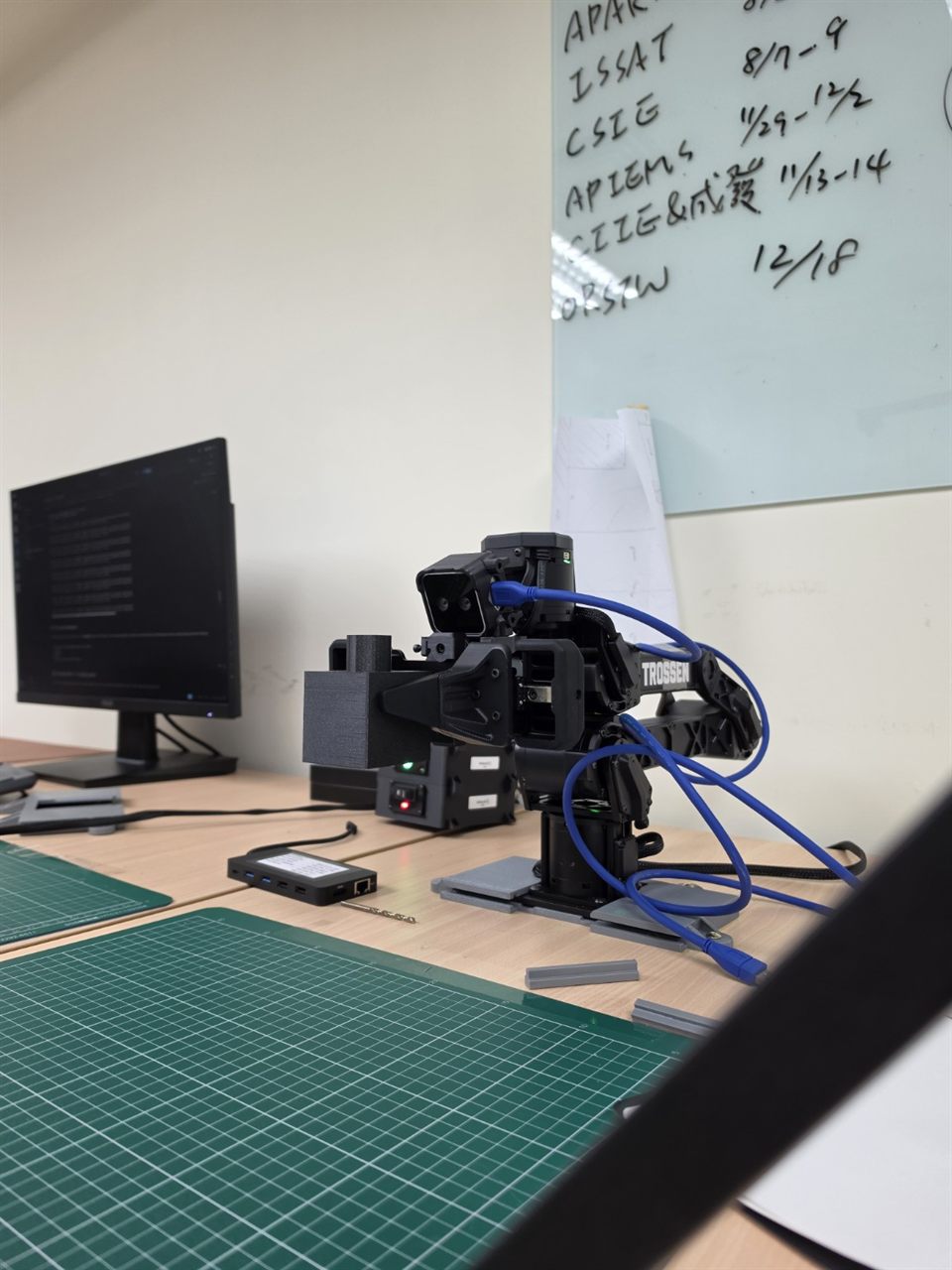
Built an initial OpenCV object-localization workflow with homography-based mapping for an approximately 600 × 400 mm planar workspace, and reviewed temporal action segmentation and anticipation methods.
Explored Taipei and nearby destinations, including Elephant Mountain, Nanzilin Trail, Tamsui Fisherman's Wharf, Ximending, and Shilin Night Market.
Workspace mapping, temporal action segmentation, and action anticipation answer different questions; each needs its own validation before robot integration.
Camera-based localization
I developed an initial camera-based object-detection and localization workflow using OpenCV and image-processing techniques. Homography-based mapping was used to estimate an object’s position in a planar workspace of approximately 600 × 400 mm, and preliminary tests examined consistency at different workspace positions.
This camera-to-workspace mapping is an intermediate step. It does not yet establish a fully validated transformation into the robot’s base coordinate frame. I also investigated possible grasp-point estimation errors for three-dimensional objects, explored MediaPipe hand landmarks, and reviewed requirements for connecting perception to physical WidowX AI control.
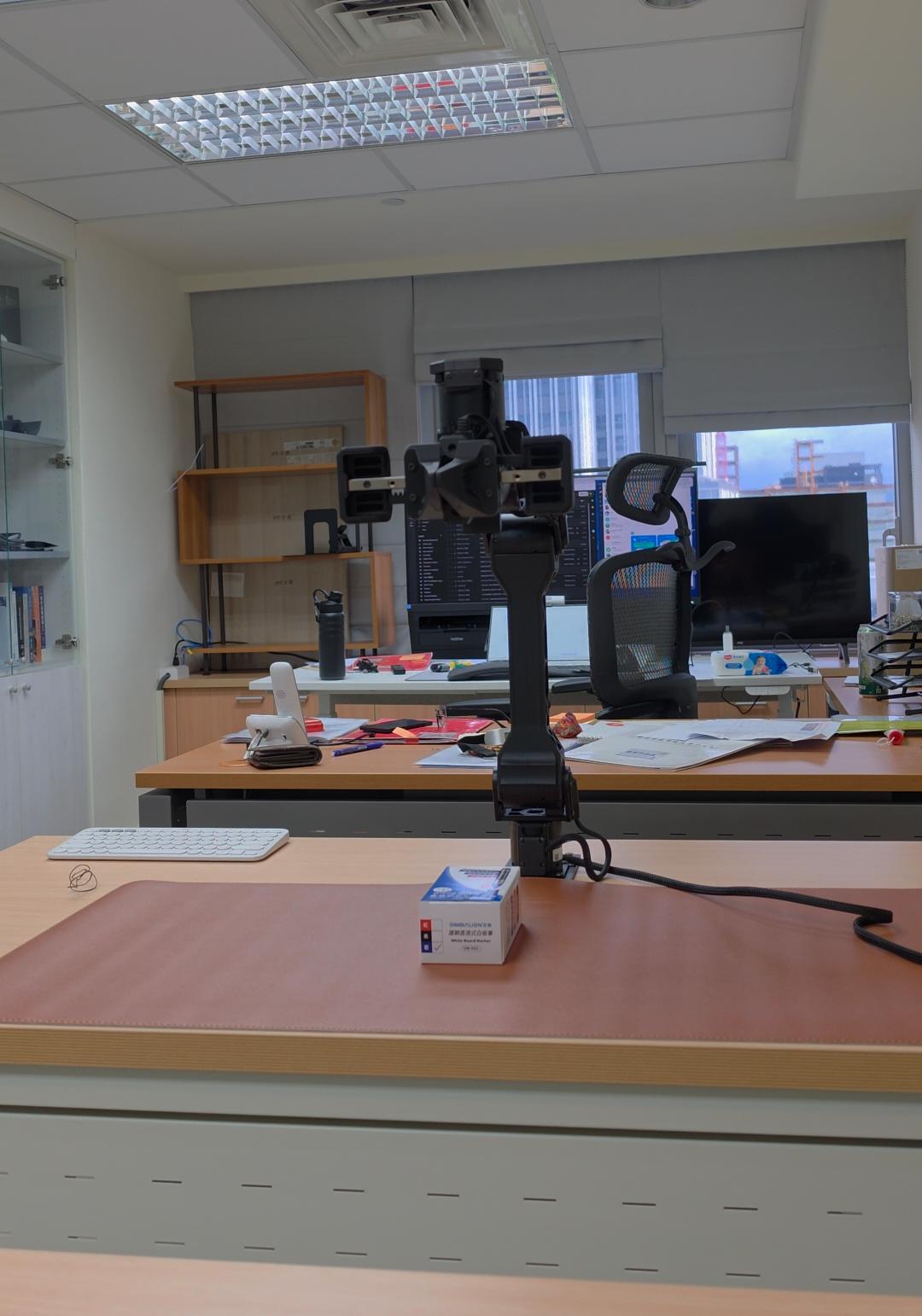
Research direction: understanding actions over time
My research direction is developing toward video-based human action understanding and anticipation for proactive robotic assistance. Temporal action segmentation identifies which action is happening in each part of a video; action anticipation predicts an upcoming action before it begins or before the current action finishes. They are related but distinct tasks.
I reviewed Assembly101 and its model baselines, including TempAgg for anticipation and MS-TCN++ and C2F-TCN for segmentation. I also examined STASDiff as a possible segmentation approach. Results reported for TempAgg on MaintAR-52 at one-, two-, and three-second horizons are literature results, not results from my WidowX AI project. Experiments at one, two, three, and potentially five seconds remain proposed work.
The next research steps are to confirm access to the collaborator’s multi-camera dataset and its annotations, establish a reproducible segmentation baseline, evaluate anticipation at defined horizons, and measure accuracy, latency, and useful preparation time. Any future robot integration will need a safe decision layer and controlled testing.
Life beyond the lab
During this period I also explored Elephant Mountain, Nanzilin Trail, Tamsui Fisherman’s Wharf, Ximending, and Shilin Night Market, experiencing Taiwan’s scenery, waterfront, and local food.